
Recycle Food Waste Collections
In terms of the Waste Hierarchy, the prevention of food waste should take priority. WRAPs ‘Love Food Hate Waste’ campaign aims to help citizens waste less food by making the most of the food available. Please see our Love Food Hate Waste page for helpful guidance . However, households are still generating significant amounts of unavoidable food waste which needs to be managed.
Why is food waste being collected?
From March 2026, district councils in Leicestershire will begin to roll out food waste collections as part of the Government’s Simpler Recycling regulations. At 26% food waste is the largest single material found in rubbish bins (based on Leicestershire compositional analysis 2025).
Collecting food waste from households for recycling can offer a wide range of benefits, including:
- Reducing damaging greenhouse gas emissions by removing the food waste content from general waste
- Increasing recycling rates
- Reducing waste disposal costs
- Producing compost for use as a soil improver
- Producing digestate fertiliser
- Generating heat and power through anaerobic digestion
Where is the food waste going?
Food waste will be collected once a week from the kerbside and taken to anaerobic digester plants near Atherstone and Derby. Anaerobic digestion (AD) is a process where microbes break down organic matter, like food waste, without oxygen, producing biogas (mostly methane), which can be used to produce energy, and digestate, which can be used as a fertiliser.
If you’re interested to find out more about the process, the Anaerobic Digestion and Biosources Association website has further information.
What to put in your food waste caddy?
Yes please – put these in your food caddy
All food items can be put into your food caddy cooked or uncooked, including:
- bread and pastries
- dairy products
- fruit and vegetables (including fruit stones)
- meat, fish, bones
- tea bags and coffee grounds
- Ready meals removed from their packaging
No thanks – do not put these in your food caddy
These items must not be put in your food caddy:
- Packaging of any kind
- Liquids
- Oil or liquid fat
- Any material that is not food waste
Caddy bags / liners
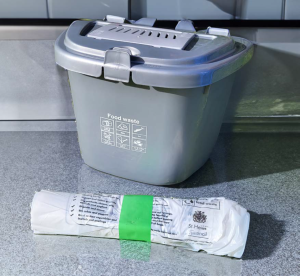
Caddy bags / liners should be used in your food waste caddy. Any type of non-black bag / liner is acceptable. Please refer to your local district / borough council website below for further details on use of caddy bag / liners in your local area.
Find out when your food waste collection will begin
For further information on food waste collections, including details on collection dates etc. please visit your local district / borough council website.
- Blaby District Council
- Charnwood Borough Council
- Harborough District Council
- Hinckley & Bosworth Borough Council
- Melton Borough Council
- North West Leicestershire District Council
- Oadby & Wigston Borough Council
FAQs
What if I don’t produce any food waste?
Remember no amount is too small. The best thing we can do with our food is enjoy it, but some things like banana skins, tea bags, and bones are unavoidable and can all be recycled.
Will the food in my bin smell?
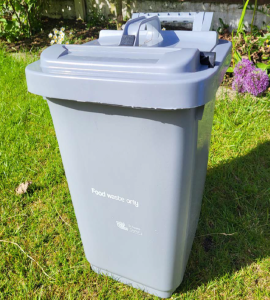
Not if you empty your kitchen caddy regularly into the outside food waste recycling bin and tie up the liners. Both caddies have a lid, and the outdoor bin has a sealable lockable lid which will stop smells getting out and anything getting in.
I don’t have enough space for the caddy, what should I do?
Kitchen caddy (7 litre): A lot of people find keeping it under the sink, next to the kitchen bin or on the worktop is practical. Remember you can use your own container if you prefer something stylish or it fits better in the kitchen
Outside bin: This is much smaller than your black bin (23 litre and similar in size to a bucket)
I’m concerned that my caddy will be dirty
To keep it clean you should line you caddy with a liner just like you do with your rubbish bin.
We’ve had food waste trials before. Why have they started again?
Mandatory food waste collections are required for all councils in England as part of the Environment Act 2021.
Also in Recycle Sub menu